
 Posted by
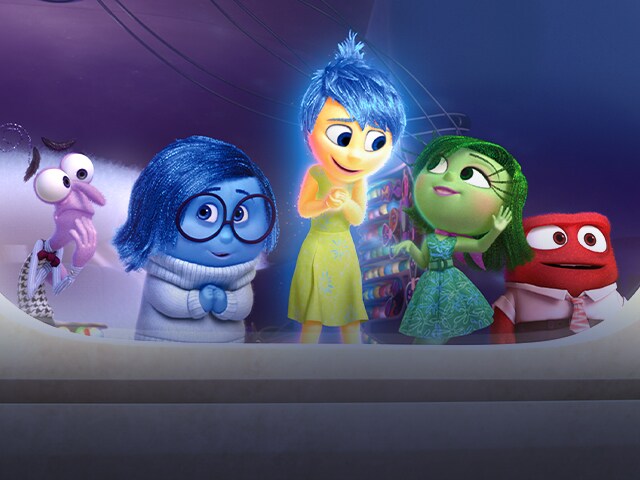
 I know I am late to the party, but I am not big on TV and I am often distracted from the obvious. I had been seeing the ads for Inside Out 2 and, in one of the workshops at New Life, we talked about the role of all emotions, not just the ones we considered “good”. I warned the kids in advance, and after Baby S got all the popcorn ready and Little Girl C did a full manicure for me, we finally gathered on the sofa to learn about emotions.
Joy
It is no surprise Joy is the first emotion that shows up when Riley (the main character) is a baby. In fact, the practice of meditation is used as the word “Sati” in Sanskrit. Sati means to remember, to remember what we know as babies and have somewhat unlearnt-like joy.
“Appreciative joy is our innate ability to delight in what’s good in the present moment, independent of our circumstances or success”- Mindful.org
Joy and happiness are often used interchangeably, but it is good to know the difference (and both are needed). You know Brené Brown is one of my favourites on anything vulnerability and emotions given the amount of research she has done, so I share her view:
“Joy: intense feeling of deep spiritual connection, pleasure and appreciation. Happiness: feeling pleasure often related to the immediate environment or current circumstances”
Brené brown
Sadness
To Joy’s great surprise, she got to spend exclusive time with Riley for about 33 seconds. A cry kicked in and Sadness entered the picture. For the largest part, Joy is running the ship (aka headquarters) and trying to keep Sadness away from the controls. In fact, Joy varies between trying to change Sadness or just keep her busy with other things to stop her from crying or feeling sad. Joy does not deal well with Sadness.
Needless to say, the majority of humans grow up defining Sadness as a negative emotion and, as such, something to be avoided at all costs. We don’t want our kids to be sad, we console them with distraction and diffusion techniques, we blame others for their mistakes, whatever it takes to avoid them being sad. And we tell them to stop crying, to believe that crying does not solve anything. I grew up being called a crybaby, I know what I am talking about!
“Crying helps me slow down and obsess about the weight of life’s problems” – Sadness
When we were about to leave London a few years back, there was a day Little Girl C had to say goodbye to her beloved Stagecoach. When she got to the car, she fell silent. I could see her body was tight and she was struggling. I turned back and said, “Hey, it is ok to cry, it is ok to be sad because you are leaving your friends. Mummy is sad to leave her friends too. It is hard to be sad but it reminds us of all the friendships we have”. With this, she started crying. It was the beginning of her mourning and mine too. We needed to allow sadness to fill our hearts as we left what was our home. That made space for Joy when we landed in Lisbon.
Fear
So much about being fearless! That was even my word of the year back in time. Let’s face it, Fear is what keeps us alive. Portrayed as the emotion that stops Riley just before the trips on a plug and has an accident, but also the one doing all the scenario analysis of what can go wrong in the first day at a new school, Fear is also one of the lingering emotions when Joy and Sadness are absent, trying to maintain some connection to life.
“Fear helps protect us. It makes us alert to danger and prepares us to deal with it.” – Kids Health
You start googling fear on the internet and you have all these top tips on how to let go of fear, how to remove fear, and how to beat fear. Luckily, you also find Mark Twain:
“Courage is resistance to fear, mastery of fear – not absence of fear.”
Mark Twain
Disgust
Alongside Fear (and Anger), the green emotion of Disgust is also one of the essential emotions from childhood. Shaped like broccoli (according to my kids, who now may never eat broccoli again), Disgust has the sharp tongue of a mean pre-teen.
The basic definition of Disgust, according to Wikipedia, is “an emotional response of rejection or revulsion to something potentially contagious or something considered offensive, distasteful or unpleasant”.
In the movie, Disgust always has an opinion and she gets credit from preventing Riley from getting poisoned – physically and socially. She is the one avoiding broccoli, but also spotting the cool girls in school and the latest fashion trends. She is hyper-aware of her surroundings, creating also sarcasm and embarrassment. You can guess how this emotion rules in the teenage years!
Anger
I am leaving Anger for last, as it is no doubt my least favourite one. Not because of the movie, it was the case already before. I grew up seeing Anger as a really negative emotion and trying to avoid causing any Anger in anyone around me. Anger made people scream and break things. And it made me scared. So I made some important decisions on the basis of that avoidance and constructed some strong judgements (and prejudices) around it. I avoided conflict. I avoided being angry.
As we learn, Anger is one of the 5 essential emotions portrayed in Inside Out. it comes as a red character, heats up quickly and burns a strong fire when it explodes. But it has a place. The result for me is that I am not good at being angry as this was not something I freely practiced growing up.
“Anger is a natural, adaptive response to threats: it inspires powerful, often aggressive feelings and behaviours which allow us to fight and defend ourselves when we are attacked.” – American Psychological Association
When I am angry, I am often too angry and too aggressive for what the situation merits. And then I quickly plunge into sadness and judgement because I was so angry.
The lessons (and thoughts) from the whole thing
(while trying not to be a total spoiler)
- During childhood, Joy runs the show, allowing the other emotions to come in and out, even if trying to keep Sadness at bay. Are we ok to let Joy be a second-grade emotion when we grow up?
- In the face of trauma, our core memories get shaken and our conflicting emotions are so confusing that we feel lost and ultimately disconnected. Do we realise how certain (lower and upper t) trauma events shake our personality?
- It is essential to feel Sadness to process life. Feeling Sadness often leads to Joy, as the weight of life is consoled by being at peace with what we are feeling. As a child, the embrace of someone else (like our parents) allows that transformation. As grown-ups, do we allow ourselves to be sad and even consoled by others?
- Anger has a place in our lives but can be an ill-advisor. In moments of loss, it can be the strongest emotion and create ideas in our lives that can then be very hard to dismantle. As I watch Anger running the show in Dad’s headquarters, I wonder if that needs to be the case to be a Dad.
- All emotions have a place in our minds, and the more we allow them to be, the more developed and expanded the console of emotions will become. Will we let our emotions (and our kids’ emotions) be, grow and develop too?
This is one movie I do not want to let fall into the dump, the place where long-term memories that are not recalled for a long time go and get erased. I want to remember that all emotions are ok, even the ones that don’t feel great!
Photo Credits: Disney Movies